Physics-feasible corridor economics. Per-aircraft operational intelligence. A single platform for the next generation of aviation. Built in Frankfurt. Patents pending.
The aircraft are real. The order book is real. The intelligence layer that the rest of aviation depends on — for route planning, for insurance, for financing, for dispatch — was built for fleets with accumulated operating evidence. AAM has none yet. Two structural gaps follow.
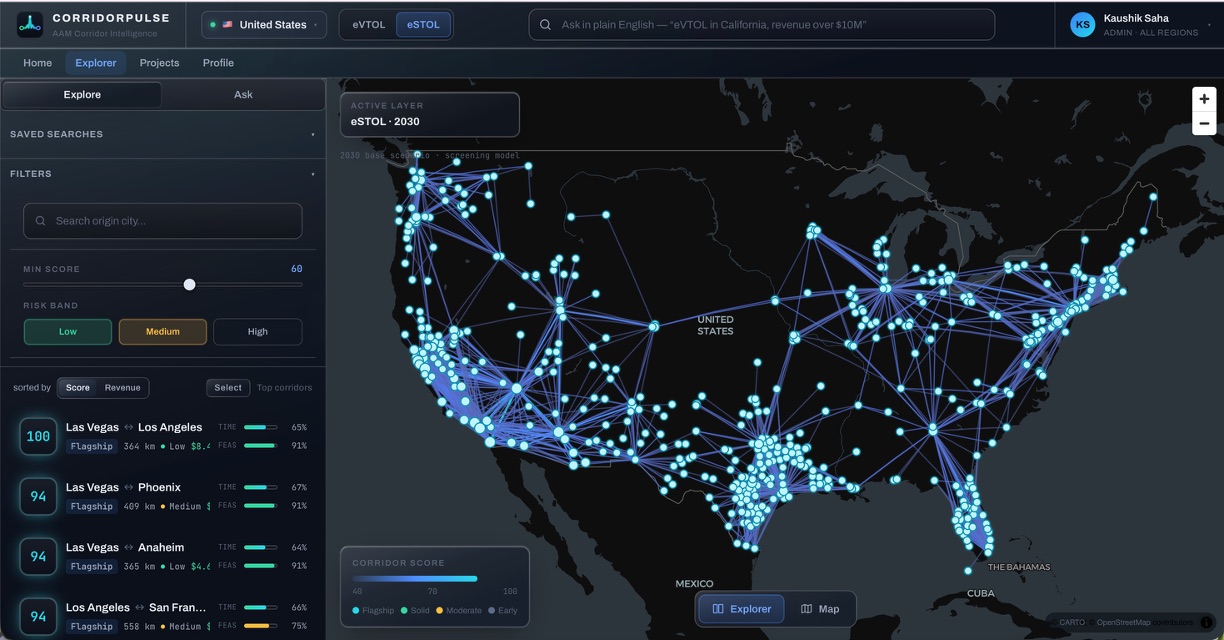
Operators, lessors, OEMs, and city planners cannot evaluate which routes a new aircraft can profitably serve. Conventional route-planning assumes fleet-average performance and accumulated route data — neither exists for AAM. Network decisions get made on spreadsheets and OEM marketing material.
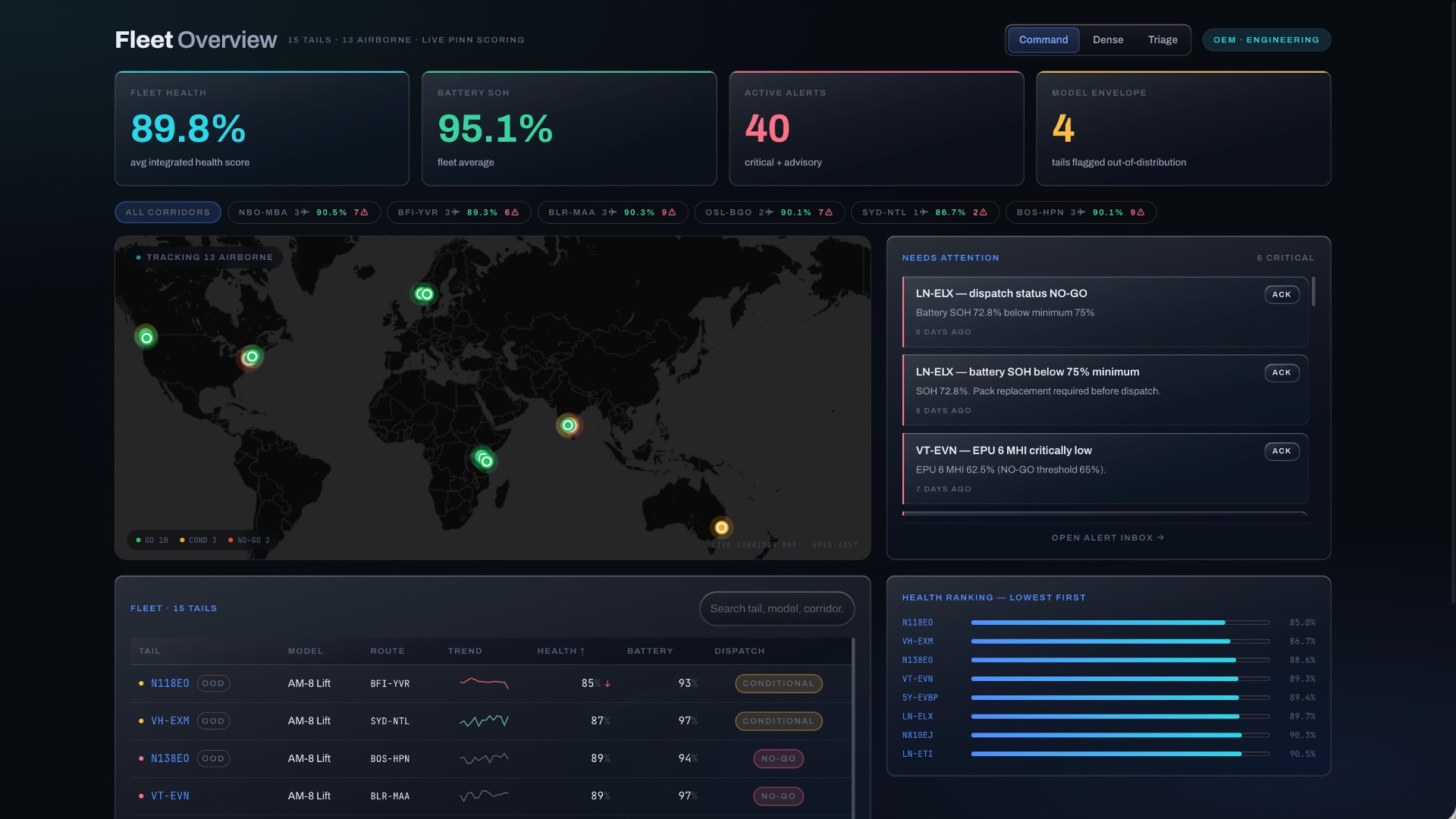
Insurers, lessors, and operators cannot make calibrated decisions about individual aircraft. Conventional aviation intelligence requires accumulated failure data to calibrate. None exists for AAM. Per-aircraft decisions — underwrite, finance, dispatch — structurally break.
AeroMind sits where conventional data-driven methods have no signal to work with. The platform serves corridor-level commercial decisions (route economics, network planning, infrastructure siting) and per-aircraft operational decisions (insurance, financing, dispatch) from a single physics-grounded core.
Physics-feasible route economics for operators, OEMs, lessors, and city planners. Calibrated corridor-level decisions at the planning horizon.
Per-aircraft state-of-health for insurers, lessors, and operators. Calibrated per-tail decisions from the first flight.
Specific technical architecture, methodology, and platform capabilities are shared under NDA with qualified investors, customers, and partners.
Price hull and liability on aircraft with no actuarial precedent, with calibrated confidence intervals from flight one.
Underwrite multi-million-dollar aircraft over decade-long leases with independent visibility into operational condition.
Identify the corridors your fleet can profitably serve before committing capital. Make go/no-go dispatch decisions backed by per-aircraft prediction — not fleet-average heuristics or experienced intuition.
Close fleet orders with credible operational intelligence the buyer's lessors and underwriters can independently trust. Receive structured field data that informs the next iteration of aircraft design.
Evaluate which corridors justify multi-million-dollar vertiport investment based on physics-feasible demand — not OEM marketing material or demographic guesses. Calibrated infrastructure planning for the AAM era.